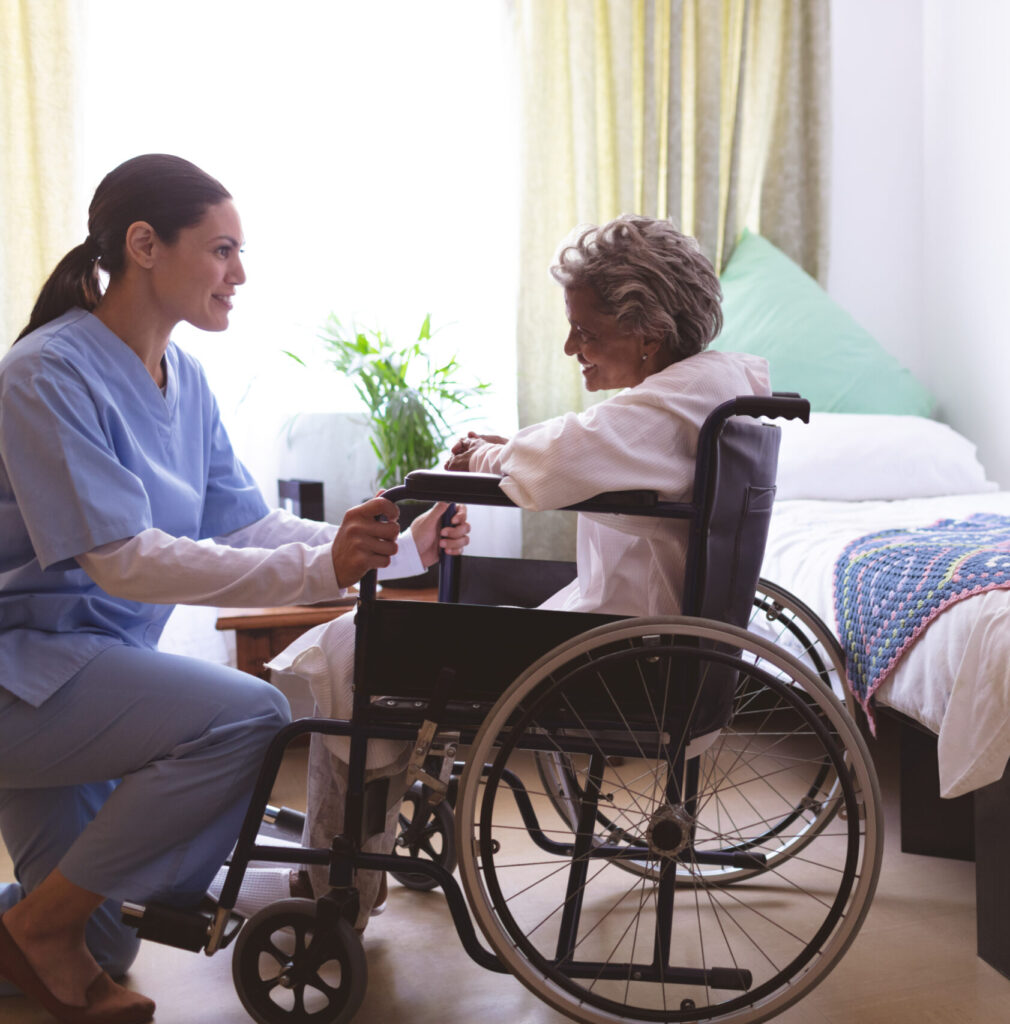

Often, members with chronic health conditions or special needs would prefer to attend church in person but are unable to do so due to the design of the worship building or a practice or custom of the congregation that inadvertently affects the health or safety of the individual with the medical condition. Rather than ask for special treatment, such as a practice or building design change, they remove themselves from in-person attendance or seek a place of worship that better meets their needs.
Encouraging Accommodation Requests
Why don’t they come forward and ask for what they need? Unfortunately, many special needs and medically challenged individuals have faced rejection for their requests in the past from those who they thought would help them – school systems, family, work, and even the health care system often fail to provide accommodations needed because they are unique to the individual. Additionally, many illnesses and injuries are invisible. Therefore, the person requesting the accommodation appears to be asking for something unnecessary from the perspective of those who cannot see the need. It may seem that the request is unnecessarily burdensome at first glance unless accompanied by medical documentation. However, from the requestor’s point of view, the church has questioned their integrity and trustworthiness by not acknowledging their need. To prevent such misunderstandings, the easier we make it for them to ask, the more likely they will want to return to our church.
Possible Accommodations and Special Needs Requests Served
Accommodation Requests – There are as many accommodation requests as medical conditions, and I could not begin to list them here. My recommendation is to post on your website and in your bulletin something like this:
We welcome everyone at _____________. If you need unique mental or physical accommodation to help you in your worship experience, please contact __________ at ___________ 24 hours before your arrival to allow us time to arrange for your accommodation. We wish to make your worship experience with us a blessed one.
Below are some accommodation considerations to help make life more comfortable for those with everyday physical needs.
Need | Possible Accommodation Needed |
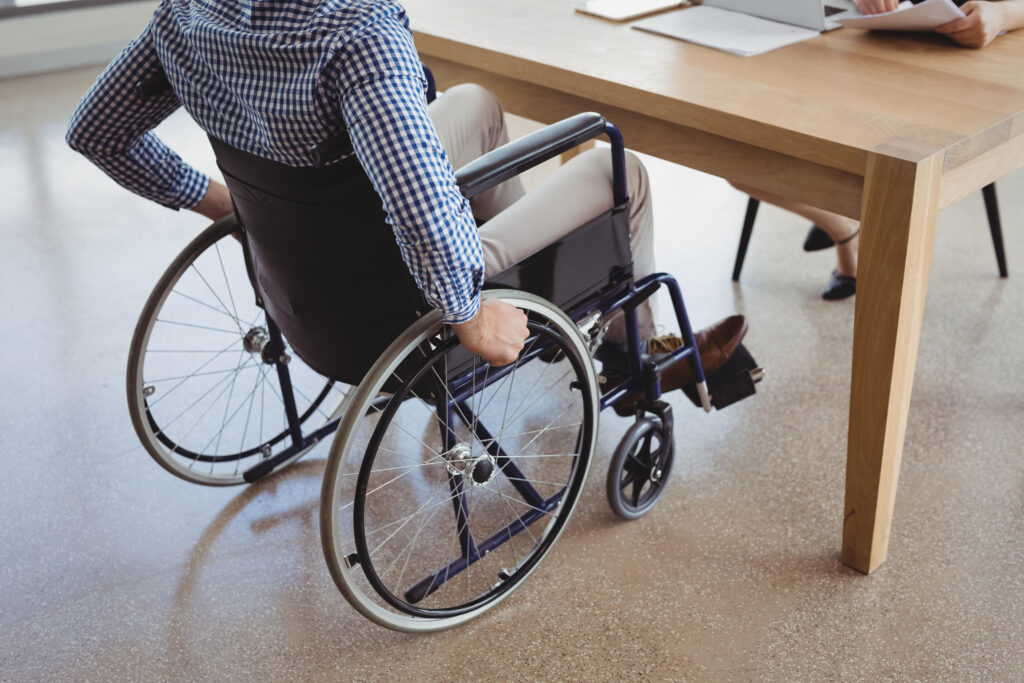
Powerchair or Wheelchair Access | · Power wheelchairs need a lot of room to turn around and maneuver. They are wider than manual wheelchairs, and therefore, door frames need to be wider. Consequently, they need wider entrance doors and pathways. · Ramps and smooth “lip ramps” overall step elevations of greater than ½ inch or more. · Automatic door openers or someone available at all entrances and restroom areas to open doors. It is challenging, if not impossible, to drive a power chair and open a heavy door simultaneously and then try to keep it open enough to go through without breaking glass. |
Scooters | · Many of the same issues as above, but may need even more room. · May need a place to recharge the battery. · A pathway for access to and from the desired location will be necessary to allow unobstructed movement and prevent injury to others or property damage. |
Walkers, canes, and other mobility assistive devices | · Clear obstructions from pathways · If rugs are in the way, secure them to the floor to prevent their edges from turning up and becoming a trip hazard. · May need a place to store equipment while sitting in a pew during services and have equipment brought to them at the end of the service. |
Immobility | · Family-style or unisex restrooms are necessary for spouses, parents, and caregivers to assist members of the opposite sex in the bathroom without needing to close a male or female bathroom while they go in together. · Indented area to park wheelchairs so they don’t stick out in the aisles · More expansive knee space for walkers to sit in front of individuals. · Provide a pew entrance without a side enclosure so that it is easier to slide in and out rather than over the enclosure. · Provide an elevator that can accommodate a scooter or wheelchair with a caregiver pushing it. If this is not an option, consider holding an alternative service or television option on the ground floor. · Attach handrails throughout the building and strategically place chairs for rest breaks. · Offer valet service to individuals with mobility challenges who use walkers and accessibility equipment to assist them in getting in and out of the building, as there are rarely enough designated disability parking spaces. |
Immunocompromised or High Risk for Infection | · Especially during respiratory virus season, many who want to attend church are unable to do so because they are at high risk of contracting respiratory viruses if they sit with the rest of the congregation. Coughing and sneezing church members expel their viruses into the air. The virus can travel in any direction that the air circuit is flowing up to six feet or more. Assign a secluded room with a closed-circuit television to provide for their safety. A separate room allows them to spread out more and reduce cross-contamination. · Promote participation in activities through FaceTime or other interactive mean.s · Offer virtual services |
Hearing Impairment | · Amplification equipment in pews · Sign language interpreters · Closed caption option for all media · Provide written materials · Allow seating in an area with fewer distractions and noise |
Blind or sight-impaired | · Braille materials · Print reader in the library · Text-to-audio apps for materials · Large print materials · Magnifier sheet/glass for pews · Audiobooks |
Anxiety | · Some members with anxiety disorders cannot manage crowds. Provide an alternate location to view services. They also may need to sit apart from others during meetings. Children may need to sit under desks or tables. · May need to stem (if autistic, they need to move to release their anxiety – bouncing balls, twirling objects, making mouth noises) · Have a clothing option available in case of soiling for both children and adults. Offer to accompany to the restroom to assist with changing and give a dark bag to carry home soiled clothing. |
Ways to Decrease the Spread of Germs
Most diseases spread through physical contact with contaminated objects. Therefore, an awareness of where and how physical touch occurs most frequently in your services can help reduce the risk of infection during worship services.
- Provide hand sanitizer. Hand wipes.
- Spray down commonly used Bibles and fans after service.
- Offer disposable gloves for those with weakened immune systems who prefer not to shake hands.
- Keep trash cans available for tissue disposal.
- Provide masks for those who wish to use them.
- Provide Communion in individual servings.
- Provide individually wrapped servings of food at gatherings.
- Encourage those who are sick to stay home, including the ministers.
- Ask the cleaning staff to use a 10:1 bleach disinfectant or an alternative that is equally effective in killing viruses.
Safety Instructions
Help members and visitors know in advance how to help protect others. Post an announcement at the entrance.
We offer each of you a warm welcome to …… Thank you for worshiping with us. To keep all our family members healthy, we refrain from shaking hands, hugging, or kissing in greetings due to the potential spread of infections. We do not wish to offend anyone with this practice, so I am explaining our reasoning and asking for your indulgence to benefit our immunocompromised and high-risk members. For their safety, we greet each other with an elbow bump (as shown in the picture).
In addition, we offer two rooms with televised services. Room x is for anyone who may wish to limit close exposure to others due to health risks, and Room Y is for those who may be concerned they have been exposed during the past week and do not wish to expose others to the same risk. Room Y requires participants to wear Masks while in the room and to sanitize their hands before and after entering and exiting the room.
The location of the elevator on the first floor is: …… If you have difficulty hearing our sermon, please let us know as you enter the sanctuary, and someone will be happy to assist you. Likewise, if you need a larger-print bulletin, please let us know.
Thank you in advance for helping to protect our church members and visitors who have health risks and wish to attend church services.
Medical Needs in the Classroom
Many faiths provide religious training to their members in a classroom setting. Many members attend these classes, including those with chronic health conditions. Rarely do the instructors know who in the class has medical conditions that might require medical intervention or what to do should a need arise. The assumption is that the instructor will call 9-1-1 and support the individual until help arrives. However, a lot can happen between a phone call and the arrival of EMS. Lead teachers should be aware of whether anyone in their class is at risk for a medical emergency and know how to intervene until help arrives. An emergency response card with the student’s name, contact information in the event of an emergency, details regarding medical conditions and treatment requirements, allergies, and any additional special instructions should be available for each instructor.
A lockbox stored in each classroom, with a key available for pickup by the teacher in the church office or security (if available), would be ideal. Anyone who has the class can pick up the key before class and then return it at the end of the class or day. This system allows for privacy and easy access, plus the option to have a spare key in one location in the event one gets lost. Another option is computer access to password-protected data, which is accessible only to authorized teachers or medical response personnel.
If a person has a medical condition requiring periodic intervention, they should notify their teacher. Provide the teacher with enough information to recognize warning signs and symptoms that require intervention. Teacher training should include emergency response interventions and their responsibility for the first steps. For example, training should consist of the steps to take for intervention, how to determine if it’s effective, and whether to call 9-1-1 or if the issue resolves itself.
Examples of conditions that could need intervention include, but are not limited to, the following:
Condition | Signs & Symptoms | Intervention |
Autism | Restlessness, getting up, singing a mantra, walking in a pattern, bouncing ball, spinning top, repetitive motions. | Leave them alone. Find their family. Stemming (the repetitive actions listed above) soothes and comforts individuals with autism spectrum disorder. It helps calm them. If you try to stop them, they may have an emotional breakdown. |
Asthma Attack | Struggling to breathe, lips turning blue, a high-pitched wheezing noise as air moves in and out of their airway. | If they have an inhaler, assist them in using it. Call 9-1-1. Find their family. Help ensure the clothing around their airway is loose, and nothing is obstructing their airway. Determine the cause of the reaction and remove it if it persists. If they have oxygen with them, use it. |
Diabetes | Becomes sleepy, sweating, slurred speech, acts intoxicated | Needs glucose asap. Have someone find their family. If they have their glucometer, take their blood sugar reading and find out how low it is. If they are still able to eat, get them to eat something. If unconscious, call 911 and try rubbing sugar syrup between the teeth and gums. |
Epilepsy | Tremors, shaking, staring, drooling, unconsciousness | Help them to a safe position. Have someone find their family. Position their head so they can breathe comfortably. If they have medication to take, it is usually placed under their tongue or on the inside of their cheek. Watch for safety as they move to keep them from getting hurt |
Stroke | Weakness on one side, drooping mouth, difficulty smiling or speaking, arms not equally rising, and difficulty walking. | Call 9-1-1. Contact their family. |
Heart attack | Pain radiating up the left arm or across the chest, shortness of breath, nausea, a sense of impending doom, | Call 9-1-1. Find their family. Keep the airway open. Loosen clothing around the neck and chest. Elevate their head on a pillow or clothing if you have difficulty breathing. Keep a watchful eye and assess for loss of consciousness. If you know CPR, follow CPR protocol if loss of consciousness occurs. |
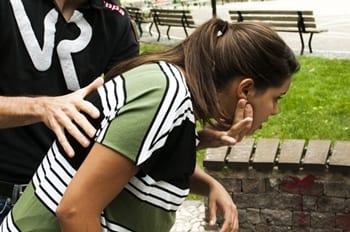
Choking | The victim’s hands go to the throat area. They attempt to speak but cannot make a sound or only a squeak. | If they can speak or cough, stand by and let them do the work. Don’t interfere until they pass out. Their efforts are better than yours. If they appear to be turning a darker shade of color, call 9-1-1; they are going to lose consciousness soon. When they do, help them to the ground so they don’t get hurt. If you know how to remove obstructions from first aid courses, try it now. Their airways are more relaxed, and it should work. The church should consider buying a cough rescue device that can be applied over the airway to remove obstacles. It works like a plugger to withdraw items stuck in the throat. |