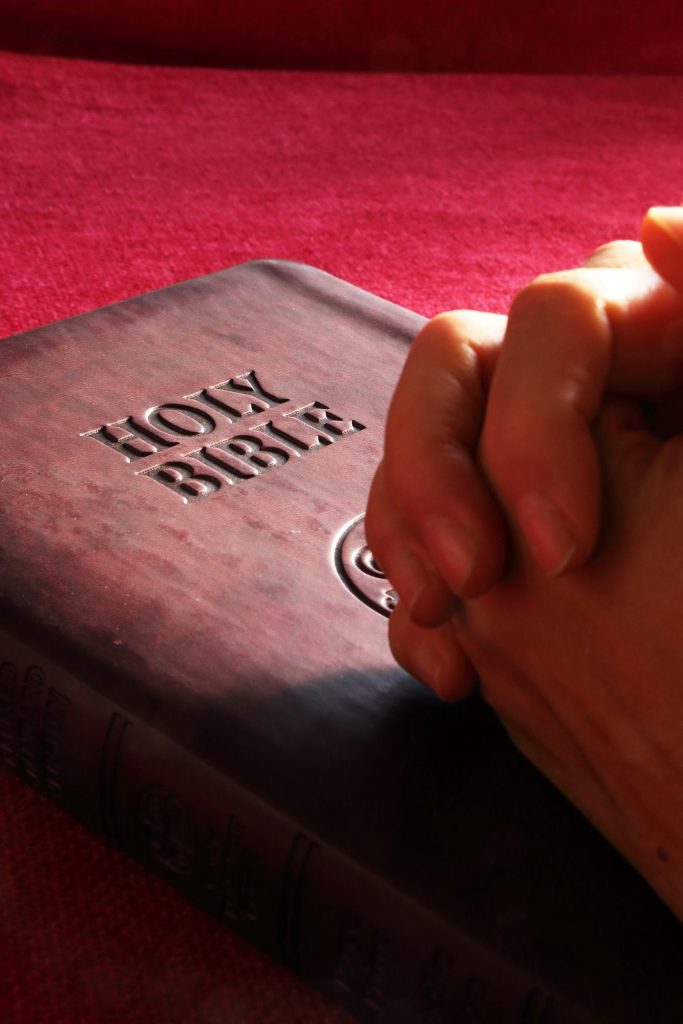

I received the newsletter referenced below this week (October 22, 2025). I found the Public Health Department’s plan to utilize faith-based organizations as a source for providing health care services to be particularly interesting. They reference how, during the COVID-19 pandemic, many faith-based organizations provided clinics and care services. Unfortunately, Virginia has not kept pace with the changes in churches. They are unfamiliar with the fact that many faith-based organizations do not follow up with members who stop coming to services, nor do they have programs in place to provide ongoing assistance to home-bound individuals or those struggling with challenging life events. Therefore, their plan to incorporate faith-based organizations as a failsafe resource is unlikely to be effective in most areas unless programs like Compass Ministry are implemented.
Listen to discover how Virginia wants to seek the assistance of faith-based organizations to help the public health departments deliver care to patients in the community.
***********************************************************************
Below is the Transcript of a Podcast distributed by the Virginia Department of Health (VDH) in their Healthcare Professionals Newsletter. The Podcast is one of five episodes discussing Health in the Commonwealth, produced in collaboration with Puddle Creative and the Commonwealth organizations of VDH, the Virginia Department of Transportation (VDOT), and cross-sectoral teams from the Virginia Walkability Action Institute and Equitable Cities. Their mission is to support the development, implementation, and evaluation of projects and policies that expand access to active transportation for communities across Virginia. The five episodes presented include:
- Art and community safety in Roanoke
- Building transportation equity across Virginia
- Active aging and combating social isolation
- Creating brain-healthy, age-friendly communities
- The role of faith-based organizations in advancing community health
Faith-Based Organization Podcast Description:
This episode explores the powerful partnership between public health and faith-based organizations across Virginia. Dr. Melicent Miller speaks with Veronica Cosby, program manager for Virginia Partners in Prayer and Prevention, about how faith communities serve as trusted messengers and community anchors in promoting health. Veronica shares how the P3 program expanded during COVID-19 to support 114 faith communities addressing health disparities through various initiatives, from telehealth support to food security programs. The conversation highlights the importance of meeting communities where they are and listening to their unique needs to build effective health partnerships.
Full Transcript of Podcast:
Veronica Cosby (00:00):
Our faith communities were our hospitals before there were hospitals; our faith communities were public health before there was a health department. It is a wraparound support from our faith leaders, and it’s essential that we don’t leave our faith communities out because they are trusted in the community. And with that trust, it bears a lot of weight.
Dr. Melicent Miller (00:35):
Welcome to Health in the Commonwealth, where we explore public health initiatives shaping lives across Virginia. I’m Dr. Melicent Miller. Throughout our series, we’ve examined how communities across Virginia are working together to create healthier environments, from safer streets in Roanoke to active aging initiatives for seniors. Today, we’re exploring another powerful partnership that’s making a difference in communities throughout the commonwealth: the collaboration between public health and faith-based organizations. Faith communities have long been pillars in their neighborhoods, providing not just spiritual guidance, but also crucial community support, education, and health resources in many areas, especially those historically underserved by traditional healthcare systems. These faith organizations play a crucial role in advancing health equity. Today I’m joined by Veronica Cosby, program manager for Virginia Partners in Prayer and Prevention, or P3, at the Virginia Department of Health’s Office of Health Equity. We’re here about how faith communities are partnering with public health to address community needs and how these organizations’ unique positions as trusted messengers and community anchors can bridge the gaps in healthcare access.
Veronica Cosby (02:12):
I work with the Virginia Department of Health Office of Health Equity. I serve as the Virginia Partners in Prayer Prevention Program manager in the division of Multicultural Health and Community Engagement. My work is community-based, where I work with faith-based organizations, an initiative that started back in 2013, 2014, called 100 Congregations for a Million Hearts, where we started the work with our faith-based organizations to reduce cardiovascular disease. And so I came into the program as a result of Zika, actually, and with the success of A Million Hearts, and as Zika came about, we started to educate congregations on Zika. And so with that, my work is how do we be more proactive? And so I’ve had the privilege since 2016 to primarily of my work is working with faith-based organizations. That’s both faith and interfaith, all denominations,
Dr. Melicent Miller (03:21):
Faith communities have deep roots in many neighborhoods across Virginia. Before we dove into specific initiatives, I asked Veronica to explain why these organizations are so important in advancing health equity.
Veronica Cosby (03:34):
And as we talk about our faith communities, they are our communities. They are a reflection of all of us in where we live, spaces where we live, spaces where we work, spaces where we play spaces where we worship the foundation of a holistic way of health, not only spiritually, mentally, physically, emotionally. Perfect example with covid, our faith communities became places of vaccinations. They became test sites. How do we then connect the resources that we have to the communities that need those resources? And I know that our faith communities are that pathway to connecting better health and wellness, and so they’re essential to the work of public health.
Dr. Melicent Miller (04:28):
This trusted position in communities make faith organizations uniquely effective partners for public health initiatives. Veronica explained how the P3 program evolved during the Covid-19 pandemic.
Veronica Cosby (04:41):
I would definitely like to highlight an expansion of our work during the time of Covid. During Covid in 2021, Virginia was awarded about $30.6 million from CDC for their health disparities funding to address inequities during the COVID-19 pandemic. Part of that funding went to our Office of Health Equity. I saw during this time where many of our faith-based communities were doing so much work, being vaccination clinics, being testing spaces, but they were also still doing the work that they were always doing, whether they were feeding the homeless, being a homeless shelter, actually devising programs for seniors. And with that came the VA P three Health Disparities grant, where we offered many grants to faith-based organizations across the commonwealth to implement projects to help reduce health disparities as an impact of covid. And they fostered those efforts around the social determinants of health. We had churches that were having programs and reading programs. We had seniors that then could not go to their doctor’s offices and then had to go do telehealth. And many of them were not used to that, where we had churches providing telehealth support. We also had partners that were addressing homelessness or food disparities. Since that start of the award, we’ve granted over 114 faith communities in the Commonwealth of Virginia. And my goal with that is that we can’t overlook our faith-based communities. They’re essential workers just as we are.
Dr. Melicent Miller (06:42):
While faith-based organizations can be found in all communities, they often have special importance in communities that have been historically underserved by traditional healthcare systems. I asked Veronica how these organizations are uniquely positioned to meet these needs.
Veronica Cosby (06:58):
Well, first of all, they’re in the community. We often are those that are coming into the community, and so our churches are embedded in all communities, and as they’re embedded and they reside there, they’re doing their own outreach. And then also we know, and this is the foundation of our faith and interfaith communities, their doors are always open and it’s a safe place, and that’s something that’s been going on for generations where you’re sick. Oh, we know some people are going to go to church, they’re going to pray. They may not go to the health department or go to the hospital immediately, but they may talk to their pastor, their rabbi, or their faith leader. Again, our faith-based communities are footprints in the community. They reside where our persons in our communities live.
Dr. Melicent Miller (07:57):
The Virginia P three program works with a diverse range of faith communities. I asked Veronica how she’s been able to build connections with different spiritual traditions beyond just mainstream denominations.
Veronica Cosby (08:10):
And with the Virginia partners in prayer prevention, we work with all denominations, whether you are Islamic Baptist, Methodist, Catholic, Buddhist. So we don’t limit our partnerships and our work with our faith-based communities. One thing that Virginia P three did was created an avenue with our newsletter in which we connected with many partners, many faith communities to be a tool to expand knowledge of resources that are available and disseminate health tools with that newsletter extended beyond what we even thought because we would get responses from our Islamic communities and our Buddhist communities to say, this is great. We are going to use this. I would say during Covid helped us expand more with other denominations because of our guidance that we were providing. And from there is that once you started to build those partnerships, you keep them connected and engaged. And we worked with a number of organizations in Northern Virginia, Islamic organizations that were doing a lot of work with food deserts and making sure that all communities were not tremendously impacted by the pandemic. So it’s always a revolving door to how our partnerships work because sometimes it’s me reaching out and then sometimes they find us. And I just think that’s just the good work of what VDH does is how we engage with our communities and being present.
Dr. Melicent Miller (10:00):
The success of these partnerships depend on clear communication about community needs. I asked Veronica how those working in this space can better support faith communities in their health efforts.
Veronica Cosby (10:11):
So we have to be a revolving tool of resources. You’re familiar with our newsletter and it goes out each month and everything I come across I try to put there and oftentimes I hear, do you have information on this? Do you have information on that? How do we better have our communities access the resources that we have, not make it a challenge for them to search or look how can they be more accessible? We talk about health awareness months, but cardiovascular disease happens all year round. Alzheimer’s happens all year round. Caregivers work all year round. So we have to also help our communities be more resourceful in regards to knowing where to find those resources and those tools. Because VDH is full of toolkits, we have a plethora of resources. It’s just us making sure we get them and get our communities connected to what we have.
Dr. Melicent Miller (11:12):
For health professionals or community members looking to build similar partnerships in their own communities. I asked Veronica what advice she’d give.
Veronica Cosby (11:21):
So I would just say be present is an initial action. Oftentimes, we can send an email, we can make a phone call, but go talk to the community. If they’re having an event, connect, be present. That is how we build so much of our connections and our relationships is that because we’re present, we want people to show up for us, but we have to show up for our communities. And so whether that’s on a Saturday or a Sunday morning, I know I have been in a congregation on a Sunday morning, how do we meet our communities where they are? And then I’ll just say, don’t be afraid to have conversation and listen. So often we are driven by what we may receive to go into the community and want to want to implement in the community. But what does the community need? And I go back to our Health Disparities grant. It was vice versa where our communities not only created or implemented programs that had already existed, but programs that were the needs of their community. And we did not dictate what was to happen and what we should do. Every program was different because they were aware of their needs. So we have to listen.
Dr. Melicent Miller (12:49):
As our conversation drew to a close, I asked Veronica about what’s next for the Virginia P three program.
Veronica Cosby (12:57):
As we see our health disparities funding coming to a slate, how do we continue that work and support our grantees that we have previously awarded That looks like how do we help share other opportunities, connect them to other partners, other agencies? Because we cannot do this work alone. We cannot work in silos. But with P three, we were around before health disparities funding, and we’re still around, and we are going to continue our community engagement. We’re going to be in the communities. We’re always there as a tool. We still get requests for resources. We get requests to connect with other agency, other departments within VDH. So we will continue to still do our outreach and help our congregations build their health ministries, their parish nurse ministries, and make sure we have the resources and information that they need to help enhance and help to live better lives.
Dr. Melicent Miller (14:06):
Throughout my conversation with Veronica, one message came through. Clearly, building healthier communities requires genuine partnership and presence. Faith communities have long been trusted anchors in their neighborhoods, and by working together with public health agencies, they can help ensure that health resources reach those who need them the most. Whether responding to emergencies like COVID-19, addressing chronic conditions or tackling social determinants of health like food security and education. These partnerships demonstrate what is possible when we meet communities where they are and truly listen to their needs. Thanks to Veronica Cosby for sharing her experiences and insights with us. And thanks to you for tuning into this episode. This wraps up our season one and we’re working to bring you new episodes for season two coming out later this year. For past episodes, show notes and transcripts, go to VirginiaPATHS.org/podcast and click the follow button on Apple or Spotify to be notified when the next episode arrives. Until next time, I’m Dr. Melicent Miller.