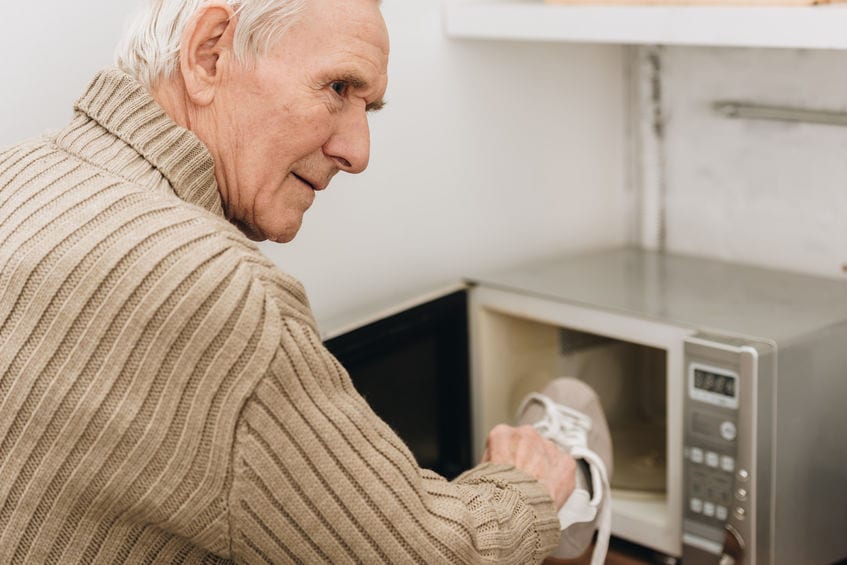
Although society is more accepting now of people seeking help from mental health professionals than years ago, in many homes and social circles, a stigma still accompanies having a mental health diagnosis. As a result, individuals are tempted to stop taking medications or seeing therapists, resulting in their condition becoming worse. Therefore, caregivers must watch for signs indicating a lack of compliance with treatment protocols, such as taking excessive or inadequate amounts, or the incorrect medication. In addition, caregivers face other challenges as they strive to support family members with mental health conditions that will be covered in this section.
Actions that are difficult to control and considered unacceptable as public behaviors could result in harm to others or have negative consequences for the person taking the action or others.
Actions that occur as a result of the inability to remember significant information; usually short-term memory related, though long-term memory can also be impacted.